
February 2025
I hope this enewsletter finds you doing well and enjoying this nice early spring weather. I have a few thoughts to share with you this month and some terrific news.
First my advice is don't push it too hard. The horses are out of shape and so are most of us. Whether you are doing yard work or putting those miles in the saddle, take it slow. We are much less likely to get sore or injured if we are fit for the task.
About a month ago, an older horse received his new saddle after his old saddle was found to be unfit. The old saddle was too wide in the width and the angle and sitting basically on his withers causing him to hollow his back. With his new saddle he was a happy camper, moving forward freely and starting to use his back but soon he became sore. This can happen when we start using muscles that we haven't used in a while or ever before. Slow and steady wins the race. Don't overdo it.
My second thought that I think is worth mentioning is stretches are our friends. There was a study done one summer at a riding school where all the horses were basically off, no riding. The only thing they did was carrot stretches. Every horse's back improved! They really work when done properly and the horses love the attention and treats.
The correct way to stretch is any way that gets the back to lift. It is not about bending the neck. Horses don't have any trouble bending their necks that is not the goal. The goal is for the horse to strengthen the core muscles which improves the saddle support area! Spinal mobility, improved posture and flexing the joints are all added benefits as well.
If you stretch your horse every day, you can see improvements in just a couple of weeks and it is free! Free less the cost of the carrots of course, which is pennies compared to what we spend on our horses. An ounce of prevention is worth of pound of cure. It is so true. Look up Hillary Clayton. She did Activate Your Horse's Core little book and DVD. It's a great resource.
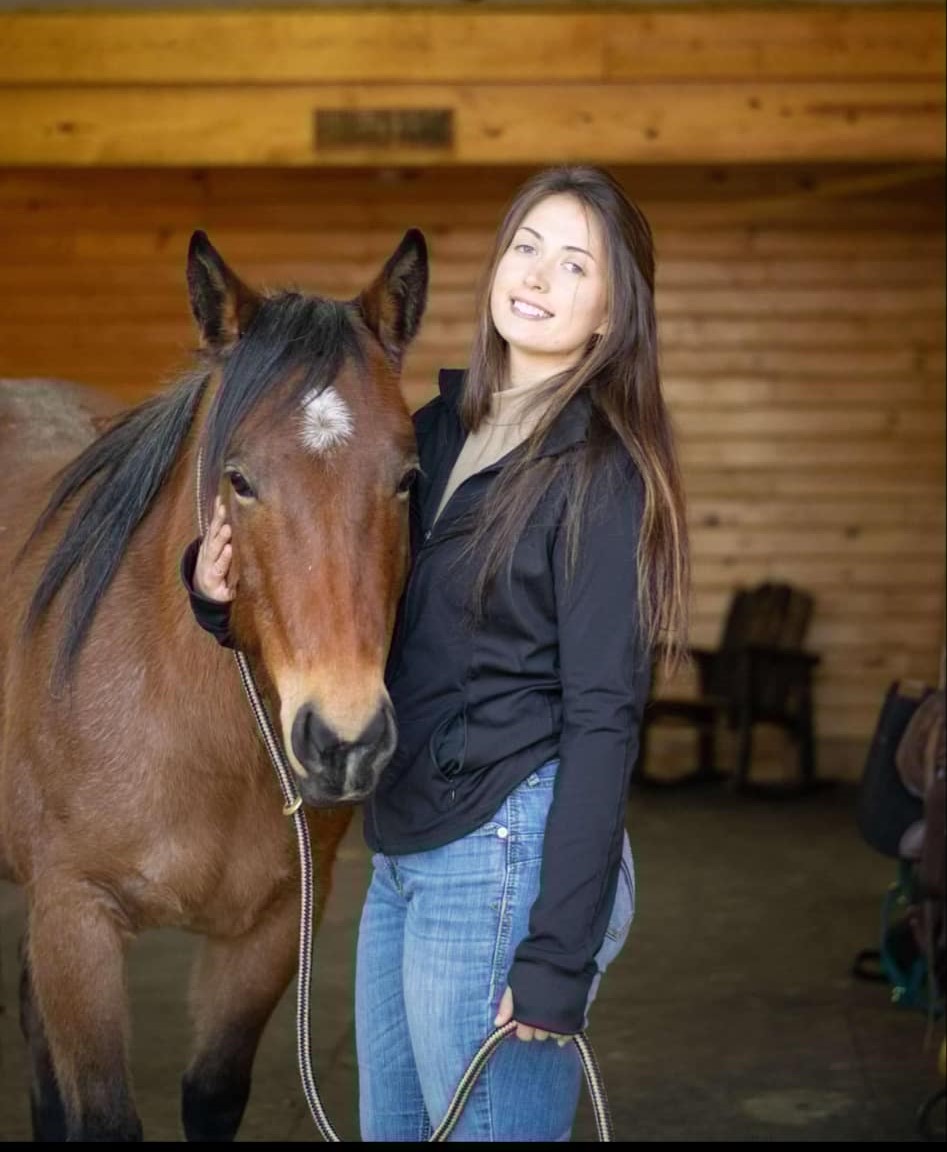
Now for the good news, she said yes! I am so grateful that God put Baley in my life. We work great together, think alike and most of all; we share the same passion for learning about saddle fit and helping the horses.
Baley Hubbard is a Crossville Tennessee native and has been an avid horse enthusiast for many years. Her family history includes the rodeo industry and her ancestors breeding the first Tennessee Walking Horse. I guess you can say horses run in her blood.
She has always had her horse's best interest in mind by staying open minded and eager to learn. Baley was intrigued with the concept of saddle fitting from the very first time we met. While attending one of my saddle fit classes, she realized her horse's soundness issues were connected to the saddle. Just like my Easy, her horse, Eleanor motivated her to learn more.
She has been helping me with saddle fit classes, presentations, evaluations and fittings off and on for the past year or so. Being around many horses and witnessing firsthand how the saddle influences them she has grown very passionate about saddle fitting and eagerly accepted when I asked her to work with me.
Learning to be a good saddle fitter takes a lot of time and study. I went to school with Saddlefit 4 Life and then was sent home to practice. Then I went back to school and then sent home to practice several times. I had to work my job training horses and giving lessons and save up to go back and pay for more training. I also worked alongside Jochen in numerous fittings all over the north east. The process is not learned in a class or a weekend. And it is not easy. It took years. Then there is the education you get from experience working with different horses and different saddles. I am so grateful that Baley is committed to this process to helping the horses.
Going out to ride! I hope everyone has a great weekend!
TTYS and God Bless,
Terry Peiper
“Spreading the word about proper saddle fit and how it affects our horse's behavior, performance and ultimately the health of horse and rider.”